
Ronald van Rijn, Chief Product, Technology & Data Officer at bol, spoke at RetailTrends Tech on 12 November 2026

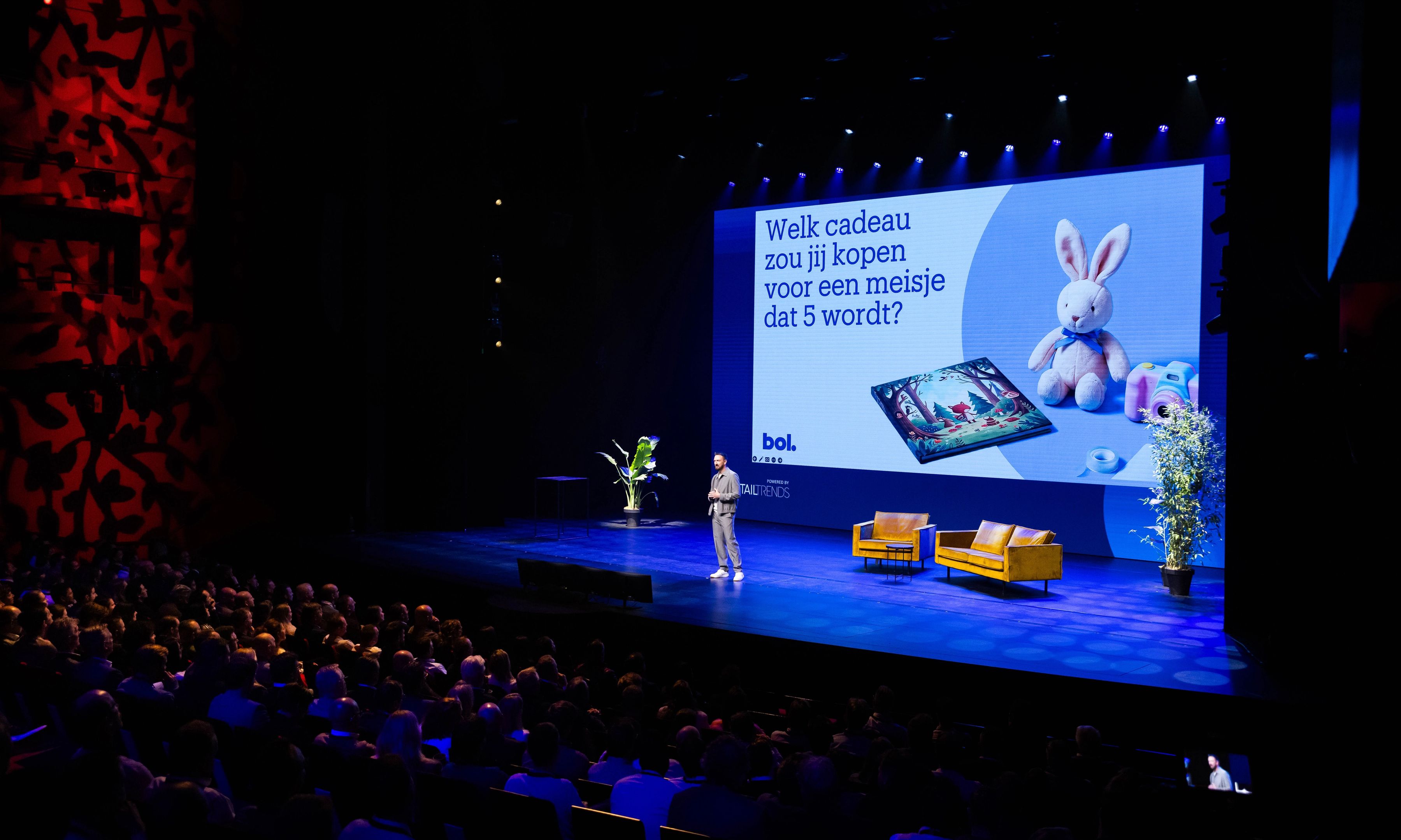
During his keynote at RetailTrends Tech, Ronald shared how AI is changing the way we search, choose and buy. His message was clear: the smarter technology becomes, the more important it is for customers to be able to trust the advice they receive.
What gift would you buy for a five-year-old girl? It sounds like a simple question, but to give really good advice, you need more information. What does she like? What does she already have? And how much do you want to spend?
That is exactly where technology is changing the way we shop. We are used to typing in a few keywords and working our way through products, filters and reviews ourselves. With the rise of AI, that is changing. Increasingly, we can simply describe what we need in our own words and expect not just search results, but advice that fits our situation.
For bol, this represents a fundamental shift. Not only because technology is becoming increasingly capable of guiding customers, but also because it raises a new question: if technology gives me advice, can I trust that advice?
From searching to being guided
For years, online shopping has largely been about searching. You type in a few keywords, get a list of products, filter and compare them, and eventually make a choice.
But the way we shop is changing. We talk to AI tools, ask follow-up questions and increasingly expect a relevant answer rather than a long list of possibilities. At the same time, the path to purchase is becoming less linear. Inspiration on social media, advice from an AI assistant, comparing options on bol and ultimately making a purchase are increasingly intertwined. According to Ronald, this is also changing the role technology plays in shopping: from providing information to actually helping people make a choice.
Tell Shophulp what you need, and it will help you choose
At bol, one way this development is taking shape is through Shophulp, our AI shopping assistant. Instead of having to know exactly which product or search term you need, you can simply explain what you are trying to find or solve.
For example:
‘My daughter is turning five. She loves crafts and animals, but already has lots of toys. I’m looking for something around €30. What would you recommend?’
Or:
‘I’m looking for a TV for a small living room, mainly to watch sports in the evening.’
Shophulp can then ask follow-up questions, find suitable products and help compare different options. This shifts the starting point from ‘here are millions of products, take your pick’ to ‘tell us what you need and we’ll help you choose’.
And that is precisely where trust becomes essential.
The smarter technology becomes, the more important trust becomes
AI can remove a great deal of friction from the shopping experience. At the same time, it can become more difficult to see where information comes from, why a particular product is recommended and what interests may be involved.
For bol, responsible innovation therefore does not mean automatically implementing every new technological possibility as soon as it becomes available. In his keynote, Ronald highlighted three tensions that play an important role in the choices we make.
1. Speed versus reliability
New AI models and capabilities are developing at incredible speed. As a technology company, bol wants to experiment with them, but the most important question is not simply: can we build this? Just as important is: do we consider it reliable enough to offer it to customers on behalf of bol?
That is why Product and Technology teams work with teams including Legal, Security and Risk from the outset. New applications are tested, improved and monitored. Sometimes, that also means deliberately waiting before introducing a capability that is already technically possible.
Shophulp is a concrete example. At the moment, it cannot access the internet in real time to retrieve additional information. Doing so would create new possibilities, but it would also increase the risk of incorrect information finding its way into the advice it provides.
2. Commercial interests versus reliability
A second consideration arises around advertising. Imagine asking Shophulp to recommend a quiet, energy-efficient washing machine for a family with three children. You expect advice that best fits your situation, not automatically the product from the advertiser who pays the most.
At the same time, advertising is an important part of the bol platform. That is why we are exploring how advertising can play a relevant and natural role in an AI-driven shopping experience in the future. The order matters: first, customers need to be able to trust the advice they receive. Then we can look at how commercial interests can responsibly fit into that experience.
3. Scale versus the human touch
With 73 million products on the platform, it is impossible for people to provide personal advice on every single product. AI can help us provide support at that scale. But that does not mean people disappear from the shopping experience. In fact, as technology becomes capable of making recommendations independently, human judgement and guardrails become even more important.
At bol, product experts, for example, review the quality of Shophulp’s advice across different categories. They assess what a good customer journey looks like and help determine how recommendations should best be made. Technology can provide support at enormous scale, but people remain responsible for setting the boundaries within which it operates.
Why would you come to bol for shopping advice?
Bol is, of course, not the only organisation able to use AI. General-purpose AI assistants are becoming increasingly capable. That raises another important question for bol: why would someone come to bol for shopping advice?
According to Ronald, the answer lies in the combination. Bol has up-to-date product information, expertise across different product categories and, when customers choose to share it, relevant context that can make recommendations more personal.
But there is something else. For 27 years, bol has been developing relationships with customers and earning the trust that comes with them. When a customer buys something through bol and something goes wrong, our role does not end once we have provided a recommendation. Our customer service team is there to help. That means our responsibility goes beyond simply generating a relevant answer.

Technology alone will not make the difference
The development of AI also raises a broader question for organisations. Almost every company will have access to the same new technologies, from generative AI and AI agents to increasingly advanced automation.
Technology on its own will therefore not automatically be a differentiator. The more important question that Ronald asked the audience becomes: what do you have as an organisation that technology alone cannot offer?
For bol, an important part of that answer is trust.
That is why the goal is not to add as much AI as possible to the shopping experience. Technology should help customers make better choices, help selling partners spend less time on repetitive tasks, and help advertisers be relevant at the moments that matter.
Because the question for the coming years is not whether technology will give us advice. It already does. The question is whose advice we choose to follow, and why we trust them.
Bol as a tech company: building the future of shopping

How technology is changing the way we shop and how bol is building for...
“International partners strengthen our relevance for customers”

Interview with Bert Potse, Lead International Onboarding at bol ...