
How bol safeguards the quality of millions of products


When you order something on bol, you expect it to be right: high quality, safe, and exactly as described. With millions of products sold both by bol and by thousands of sales partners, that doesn't happen automatically. Bol is an open platform where entrepreneurs can offer their products. This creates a broad and diverse assortment, but it also comes with a responsibility. How do you safeguard safety and quality on such a large scale?
Whether a product is sold by bol or by a sales partner, it simply needs to be good*. The assortment must comply not only with the strictest European legislation, but also with our own high standards. That's how we differentiate ourselves as a local player in an increasingly internationalising market. To maintain this high quality bar, we apply three clear fundamental requirements that both sales partners and products must meet:
- In line with laws and regulations: Customers must be able to trust that everything they buy on our platform complies with applicable legislation in the Netherlands and Belgium, as well as relevant European standards.
- In line with bol standards: Products must meet the quality expectations we promise our customers.
- In line with bol values: The assortment must reflect our ethical values, with respect for health and safety.
The Platform Quality department, led by Director Jeroen van Deurzen, plays a central role in this effort. Across multiple teams, around 60 colleagues work alongside technology that runs around the clock to help create the safest possible platform. As manually reviewing tens of millions of products one by one is impossible, bol relies on a smart, continuously learning safety net built around three distinct phases: prevention, monitoring, and enforcement. In this process, humans and machines work hand in hand: AI detects potential risks based on data, but critical decisions remain a human responsibility.
PHASE 1: PREVENTION Screening at the gate
Quality control starts before a product ever goes online. New sales partners undergo a strict due diligence process during onboarding, similar to the screening procedures used by banks. Partners that fail to meet our fundamental requirements are denied access from the outset. Once a partner is active, every new product must pass through a digital validation process.
- Mandatory product information
Sales partners are required to provide key information, such as manufacturer details, energy labels, or age classifications for products like toys. If the information is incomplete, the product simply won't go live. Jeroen van Deurzen compares this process to a kind of Tinder for products: "If a product meets the requirements, it gets a green light. If it fails on one or more points, it's a red light." - Intelligent risk detection
The system automatically identifies risky combinations. For example, if a product in the Clothing, Shoes & Accessories category is described as containing snakeskin or leather from an animal protected under CITES regulations, the international convention protecting endangered species, the product is automatically rejected. - Additional checks for high-risk categories
Certain product groups require extra scrutiny. These include medical devices, luxury brands, and personal protective equipment. Sales partners must provide supporting documentation, such as purchase invoices, to demonstrate legitimacy and safety. Some high-risk products are subject to additional requirements, such as valid authorization or registration numbers. Bol carefully considers the potential impact of every product category. A malfunctioning computer mouse can be annoying; a defective life jacket can be life-threatening. Naturally, the latter requires far more attention.
This process combines human expertise with smart technology: automation reviews products at scale, while final assessments and complex decisions remain firmly in human hands.
Jeroen explains how AI has significantly strengthened screening at the gate: "We previously monitored product submissions for risks automatically, but our teams still reviewed every hit manually with a simple yes-or-no decision. As a result, we only monitored categories where we expected risks. For example, we searched for prohibited butterfly knives in DIY or Cooking categories because elsewhere we generated too many false positives, such as duvet covers featuring butterfly prints.
Today, AI-scans all categories directly. While this generates more false positives, it also allows us to identify far more products that shouldn't be listed. Most products are now assessed entirely by AI, enabling us to dramatically increase the scale of our controls. We went from 270,000 manual checks in 2024 to nearly 2 million AI-assisted product validations in 2025, more than seven times as many. In the first half of 2026 alone, we've already reached 3 million validations. Our people remain indispensable, but they can now focus on the more complex cases."
PHASE 2: MONITORING Continuous quality checks
Once a product is listed, the work doesn't stop. Quality and safety monitoring is an ongoing process that continuously adapts to emerging risks, changing regulations, and signals from regulators, journalists, and even customers. To keep a constant finger on the pulse, bol operates multiple forms of monitoring around the clock through a combination of technology, specialist teams, and the platform's users themselves.
- Automated checks
Sophisticated systems continuously scan for risks. For non-food products, bol proactively monitors the European Union's Safety Gate, the official alert system for dangerous consumer products. These checks consist of multiple layers. First, products are screened using their EAN code (the product's unique barcode). This is supplemented with product information checks and advanced image recognition technology. The algorithm compares product images from the platform with images published in European safety alerts, enabling potentially risky products to be identified and matched quickly. - Human reviews
While computers excel at identifying patterns, the Platform Quality team provides the critical human judgment needed to interpret complex situations and unusual data signals. Specialists focus on specific areas, such as detecting counterfeit products. Their work is both reactive and proactive. When a brand files a report, teams investigate cases in detail and may review purchase invoices and supporting documentation. At the same time, they actively search for risks by closely analyzing product returns and customer feedback.
PHASE 3: ENFORCEMENT & INTERVENTION Taking action when necessary
Whenever checks reveal that a product or sales partner no longer meets bol's requirements, action is taken. The platform operates under a clear and transparent enforcement policy. "Wealways carefully balance customer riskagainst the impact onour partners," says Jeroen van Deurzen. "Weactively encourage good behavior, but customersafety always comes first." Enforcement is based on a points system. Every partner starts with 100 points. Violations result in points being deducted. Partners who comply with the rules for a full year after an infringement can regain the points associated with that violation. If all points are lost, the partnership is immediately terminated and the partner is removed from the platform. Conversely, partners who consistently perform well are rewarded with platform benefits.
Additional enforcement measures include: - Removing products or partners
If a product no longer meets legal requirements or platform guidelines, it is immediately removed from the platform and can no longer be found or ordered by customers. In some situations, the partner is given an opportunity to provide additional information or documentation. In cases involving serious violations, the partner may be permanently banned from the platform to protect customers. - Product recalls
If a product poses a safety risk, a recall may be required. For products sold directly by bol, the company manages the recall process itself. For products sold by partners, bol assists in informing affected customers. Since partners do not always have access to customer information, bol ensures that customers are informed promptly so they know exactly what action to take. - Taking entire categories offline
Sometimes situations are so complex or sensitive that intervention is required at a category level. Recently, for example, bol proactively removed an entire category of playground sand while awaiting the outcome of an investigation by the Dutch Food and Consumer Product Safety Authority (NVWA). In situations like these, bol chooses caution over uncertainty to maximize customer safety.
These decisions often go beyond legal compliance and touch directly on the platform's core values. Jeroen explains: "Our bol values are extremely important. Take the Prince's Flag, for example. In the Dutch town of Brielle, it historically symbolizes the revolt against Spanish rule, but today it is also associated with a far-right extremist movement. When we see that a product has become a symbol of something that conflicts with our values and may be hurtful to customers, we remove it from the platform. That applies even when the product itself is neither unsafe nor illegal. There is no debate in these kinds of ethical situations, we act immediately."
An ongoing process
Safeguarding quality and safety is never truly finished. It is a continuous process that evolves alongside new legislation, changing risks, and signals from the market. This approach is precisely what sets bol apart as a local player. As Jeroen van Deurzen concludes: "At bol, there are still real people behind the controls. If something goes wrong or customers have questions, we're easy to reach and happy to have a conversation. We expect the same high standards from our sales partners. Anyone selling through bol commits to that same promise of reliability and safety for our customers."
* As an open platform, and in line with the European Digital Services Act (DSA), we are not liable for the products offered by our sales partners. Nevertheless, we take our responsibility for maintaining a trustworthy and high-quality assortment extremely seriously.
Bol launches bol.checkout in Belgium: checkout in other webshops using your bol account
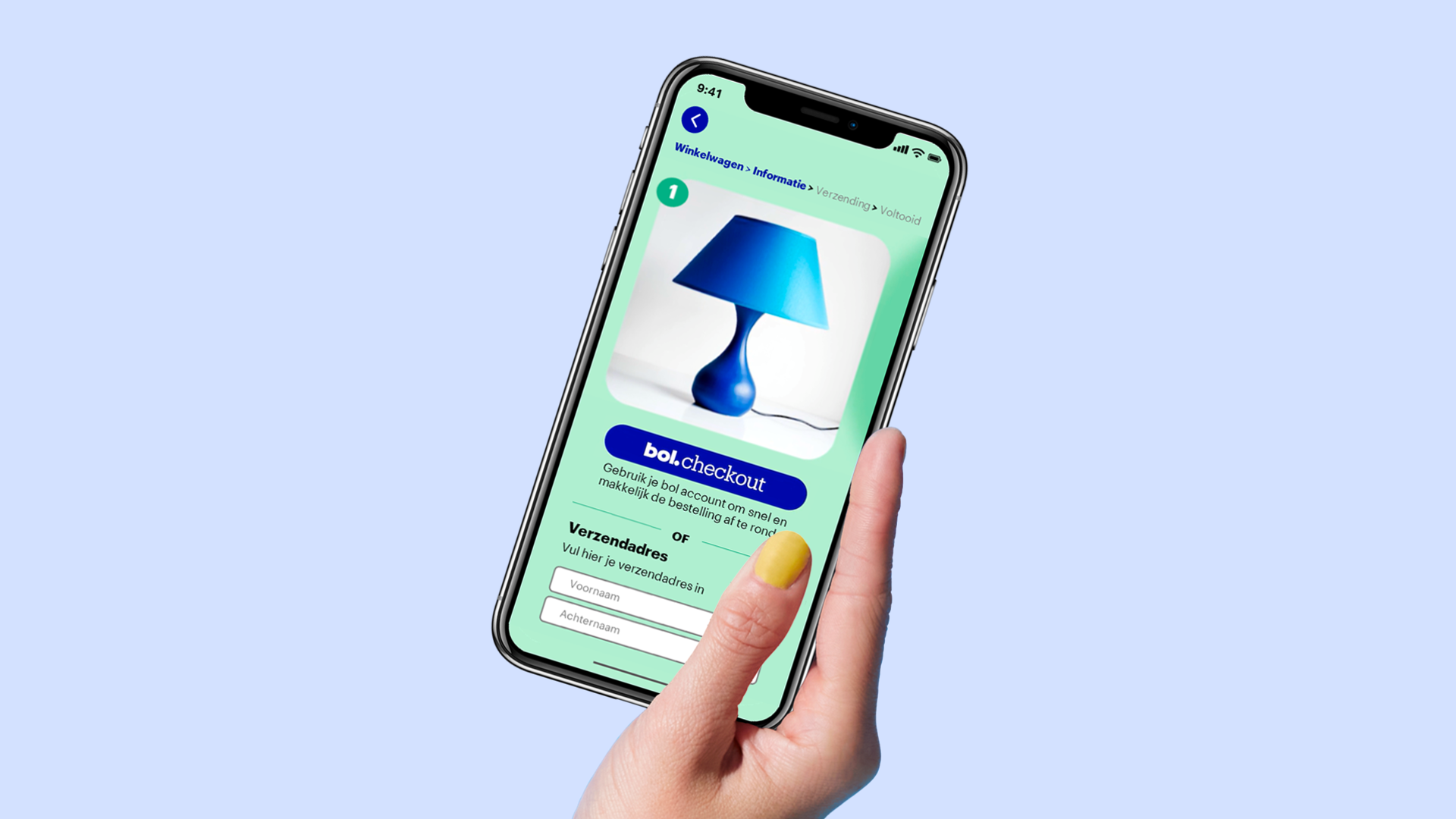
Bol now makes its technology available to webshops in Belgium...
How do bol and its selling partners ensure that orders run smoothly?

We explain it in “How does it work at bol?” ...